The mistake most brands make when hiring a Shopify dev agency is starting with the agency instead of the problem. They compare portfolios, day rates, retainers, testimonials, and sales calls before they have decided what kind of work actually needs to be bought. That is how a small theme cleanup becomes a six-month redesign, or a serious architecture problem gets handed to a cheap task shop.
In 2026, Shopify hiring needs more discipline. The platform is more capable, customer expectations are higher, AI shopping surfaces are starting to read stores differently, and paid traffic is too expensive to send into a fragile storefront. The right agency can compound growth. The wrong one can add another layer of technical debt with better presentation.
Start by ranking the business problem, not the wishlist
Before you talk to an agency, sort the work into one of four buckets: revenue leakage, operational drag, brand experience, or platform readiness. This sounds basic, but it changes the conversation immediately. A cart bug, a slow PDP, a theme migration, and a new visual direction do not need the same partner, scope, or timeline.
- ✓Revenue leakage: conversion issues, broken cart behavior, slow product pages, checkout friction, mobile PDP problems
- ✓Operational drag: metafield workflows, collection logic, variant management, bulk content systems, repeat manual tasks
- ✓Brand experience: custom sections, homepage systems, product storytelling, premium UI polish, campaign landing pages
- ✓Platform readiness: Shopify 2.0 migration, app cleanup, checkout extensibility, schema, product data, AI-commerce discoverability
If the problem is revenue leakage, prioritise diagnostic ability and speed. If the problem is operational drag, prioritise Shopify architecture and merchant-editable systems. If the problem is brand experience, prioritise design-to-development quality. If the problem is platform readiness, prioritise technical judgment and long-term maintainability.
Do not hire a redesign team for a prioritisation problem
A lot of Shopify brands ask for a redesign when what they really need is a ranked fix list. If conversion is soft, the homepage feels tired, and mobile revenue is lagging, a full redesign might be the answer. But it is not automatically the first answer. You may get more from fixing load time, PDP hierarchy, cart confidence, variant selection, and app conflicts before touching the entire visual system.
A good Shopify agency should be willing to tell you when the first move is not the biggest invoice. In practice, that means they can audit the store, separate symptoms from causes, and explain which fixes should happen before a bigger rebuild. If every conversation becomes a redesign proposal, you are probably not getting prioritisation. You are getting a sales motion.
If you need a faster first pass on what to fix, HiveSense can generate a prioritised CRO report in minutes.
Try HiveSense →Match the agency type to the work
The word agency hides very different operating models. Some teams are strongest at brand and visual direction. Some are implementation partners. Some are app developers. Some are ongoing support teams. None of those models are inherently better. They are just built for different jobs.
- ✓Hire a design-led agency when the core problem is positioning, visual identity, storytelling, and the storefront needs a new creative system
- ✓Hire a Shopify dev agency when the core problem is implementation quality, technical debt, custom features, speed, and theme architecture
- ✓Hire a CRO partner when the core problem is prioritising experiments, analysing behavior, and turning traffic into clearer decisions
- ✓Hire a support partner when the core problem is a steady stream of fixes, feature requests, and Shopify work that never quite stops
The risk is hiring one model and expecting another. A beautiful brand studio may not want to debug checkout extensibility. A task-based freelancer may not be the right owner for a full theme architecture. A CRO consultant may identify the right problems but still need a dev team to ship the fixes. The cleanest engagements are honest about that from the start.
Ask better questions before you ask for price
Price matters, but it is rarely the best first filter. A cheap quote on the wrong scope is expensive. A premium quote with weak technical thinking is also expensive. Before you compare numbers, compare how the agency thinks.
- ✓What would you inspect before recommending a redesign?
- ✓Which parts of this store would you leave alone?
- ✓Where do you see technical debt versus visual preference?
- ✓How would you make the sections merchant-editable without making them fragile?
- ✓What would you ship first if we had two weeks, not three months?
- ✓Which app-driven parts of the storefront would you replace, keep, or simplify?
- ✓How do you validate performance and mobile behavior before handoff?
The answers reveal whether you are speaking to a team that thinks in outcomes or a team that thinks in deliverables. You want both execution and restraint. The best Shopify work is often knowing what not to rebuild, what not to install, and what not to overcomplicate.
Use a simple priority score
When a brand is choosing between multiple agencies or scopes, we like a simple scoring model: impact, urgency, complexity, and internal ownership. It keeps the decision from turning into vibes.
- ✓Impact: Will this work meaningfully affect conversion, revenue, retention, operations, or brand trust?
- ✓Urgency: Is this blocking current campaigns, migration plans, BFCM prep, or day-to-day merchandising?
- ✓Complexity: Does the work require deep Shopify architecture, app integration, checkout knowledge, or careful QA?
- ✓Internal ownership: Can your team maintain the outcome after handoff, or do you need ongoing support?
High impact and high urgency work deserves senior attention. High complexity work deserves a technical agency, not a cheaper generalist. Low complexity work might be perfect for a task-based support partner. Work with weak internal ownership should not be scoped as a one-off and then abandoned.
"The right Shopify partner is not the team that says yes fastest. It is the team that can tell you what matters first and why."
— Robin Singh, Thought Bulb
What good looks like in 2026
A strong Shopify dev agency in 2026 should be comfortable across theme architecture, speed, conversion UX, app boundaries, checkout extensibility, product data, structured content, and AI-commerce readiness. They do not need to be the best in the world at every discipline, but they do need to know how those pieces affect each other.
That is the difference between shipping a prettier store and shipping a better operating system for commerce. The second one is harder to sell in a screenshot, but it is usually what the brand actually needs.
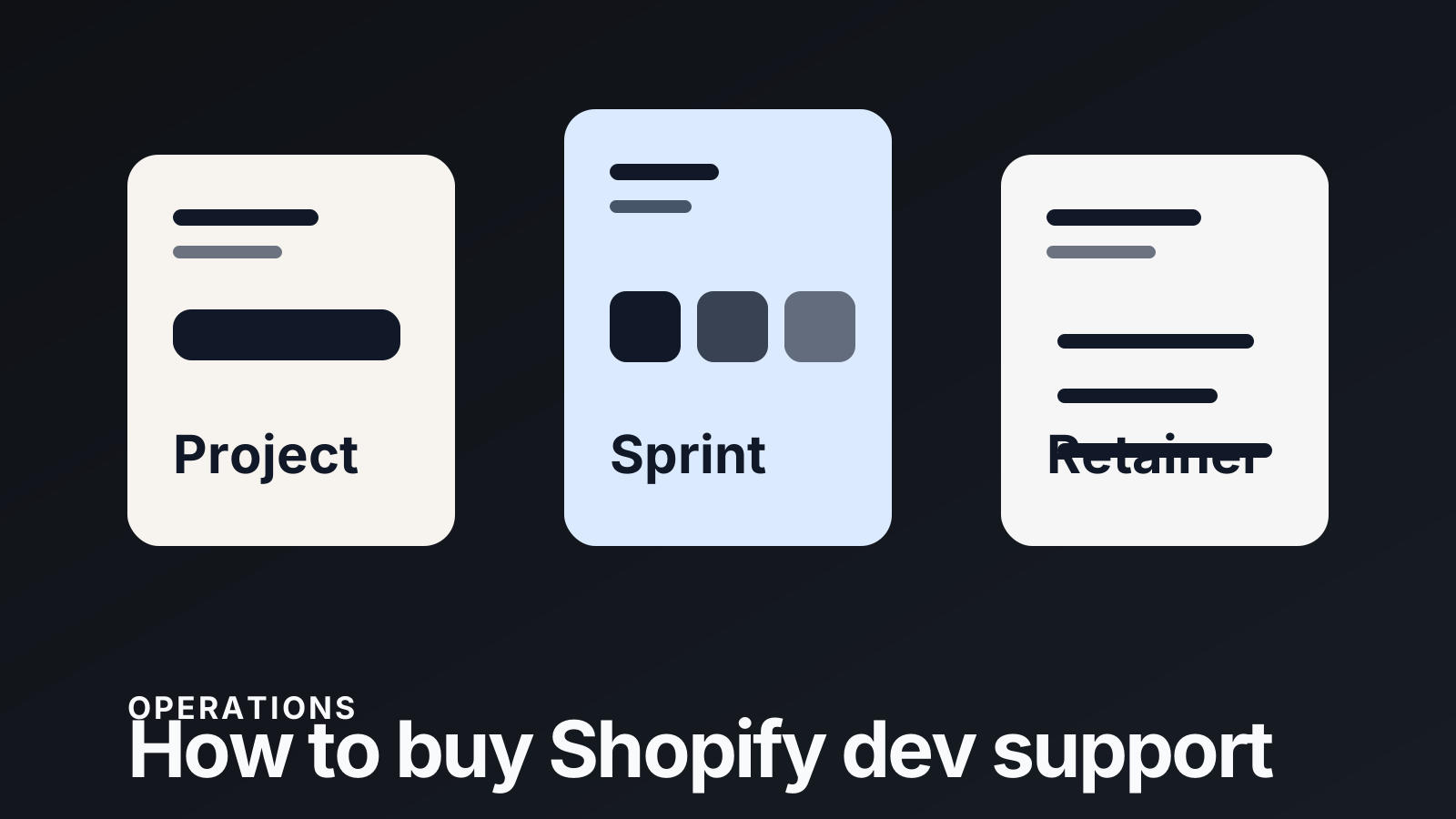
If you need help deciding whether the work is a fix, a sprint, a rebuild, or ongoing support, start with the task library.
View Shopify task library →